Comparability
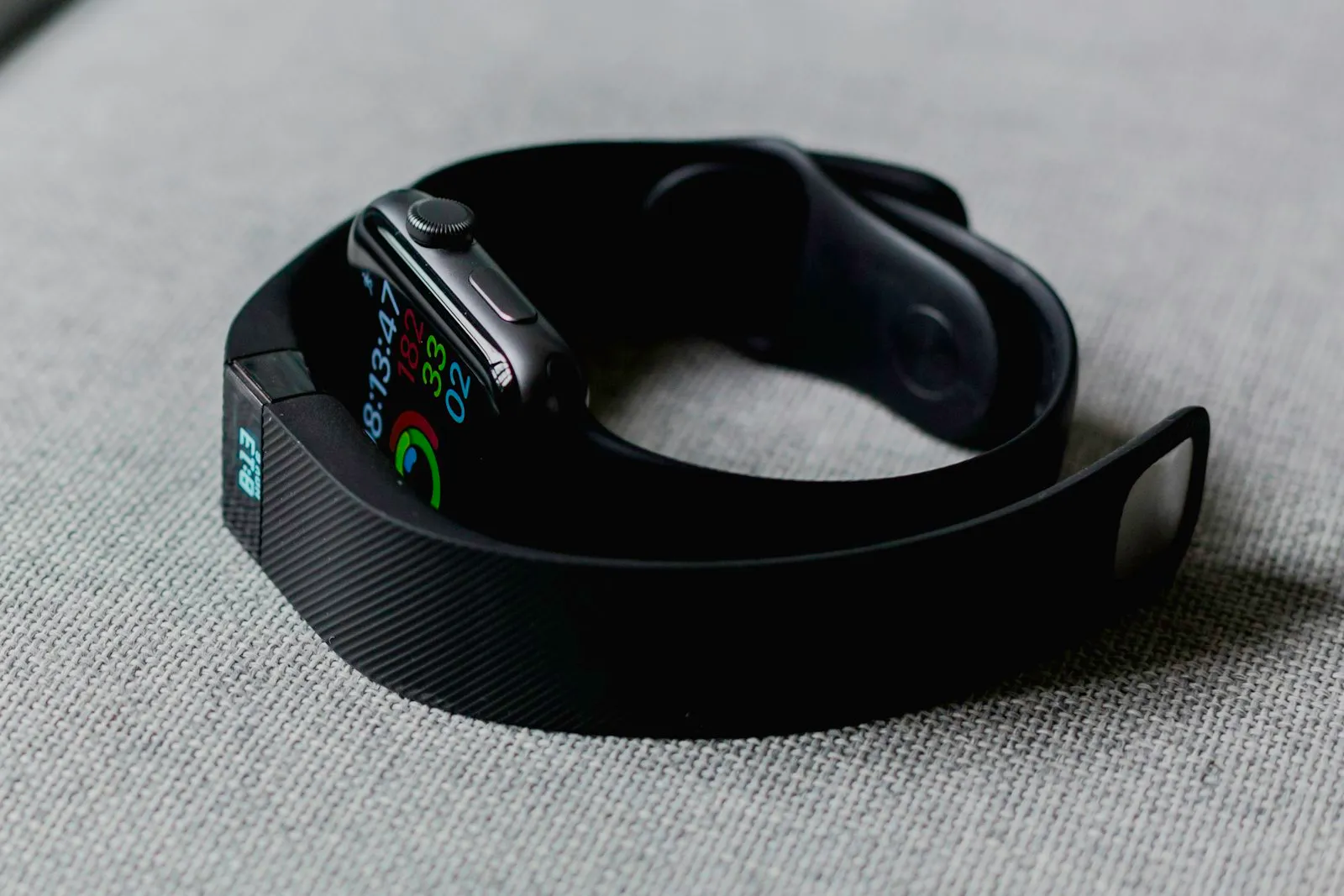
Why your phone, watch and ring all show a different step count
Your phone, watch and ring can disagree by thousands of steps a day. Here is what each one is actually counting, and which number to trust.
Quick answer
They disagree because each device counts from a different place on your body with a different motion threshold. A wrist wearable reads arm swing, a phone reads hip or pocket sway, and a ring reads hand movement, so the same walk registers differently on each. None is the true count. Pick one device, wear it the same way every day, and only ever compare it to itself. Between two people, only compare steps logged on the same kind of device.

You take one walk to the coffee machine. Your watch says 82 steps, your phone says 0, and your ring quietly logs something in between. All three are on your body. All three disagree. None of them is lying.
The gap is not a glitch. It is the direct result of three different sensors watching three different parts of you move.
What each device is actually counting
A step counter is an accelerometer plus a rule. The accelerometer feels movement; the rule decides which wobbles are steps and which are noise. Both the sensor’s location and the rule differ by device.
Where each device reads a step from
| Phone | Wrist wearable | Smart ring | |
|---|---|---|---|
| Reads motion from | Your hip or pocket | Your wrist and arm swing | Your hand |
| Misses steps when | You leave it behind | Your hand is still (pushing a cart, holding a rail) | Your hand is still |
| Adds phantom steps when | You are in a bumpy car or bus | You gesture, clap or wash up | You gesture with your hand |
| Best at | Deliberate walks while carried | All-day capture on your body | All-day capture, discreetly |
Read the middle two rows. A phone worn on the hip moves once per stride, which is close to how you would count by hand, but only while you actually carry it. A wrist device is on you all day, which is its real advantage, but your arm does not swing in perfect lockstep with your legs.
Why the daily totals drift apart
Small per-step differences compound. If your watch adds a few percent from hand movement and your phone drops every step you took without it, by bedtime the two can sit thousands apart. That is expected, and it is why the honest way to read steps is the same as the honest way to read a recovery score: as a trend against yourself, not a truth you hold against someone else.

This is the same trap that makes branded scores incomparable, covered in why WHOOP Recovery, Body Battery and Oura Readiness never match. Steps are in much better shape than those scores, because a step is a real unit rather than a brand’s private index. But the measurement still depends on where the sensor sits.
How to make step counts comparable
You cannot force two different devices to agree. You can do the next best thing.
- Pick one device and wear it the same way. Consistency beats accuracy. A number that is slightly off but stable tells you more than a “true” number you only capture on some days.
- Compare yourself to yourself. Yesterday’s you, on the same wrist, is the only fair opponent for a raw step count.
- For a group, agree on the unit. Same device type, or switch the contest to distance in kilometres and active minutes, which hold up far better across brands.
- Ignore single-day swings after an update. If everyone’s numbers shift at once and nobody changed their behaviour, the filter changed, not your fitness.
What to do with this
- Stop chasing a “real” step count. There isn’t one. There is your device, worn consistently, trending up or down.
- Beat your own streak. The most useful thing a step count does is give you a line to stay above every day.
- Compete on units, not sensors. If you want to race friends, race on kilometres and active minutes, or match device types first. The best apps for competing with friends are the ones that rank a mixed group on exactly those units, and for a step race on matched devices the step challenge apps guide compares the free options.
That last point is the whole idea behind Fit, the cross-brand fitness competition app: it ranks crews on the measures that survive the jump between devices, so a Fitbit and an Apple Watch can compete without pretending their step filters are identical.
Questions people actually ask
Why does my phone show fewer steps than my watch?
Because your phone only counts while you are carrying it, and your watch counts whenever your wrist is moving. Leave your phone on the desk and walk to the kitchen and the phone records nothing, while the watch adds those steps. Over a day the watch almost always reads higher for this reason, not because it is more accurate.
Which device counts steps most accurately?
For a deliberate walk, hip-worn and phone pedometers tend to be closest to a hand count, because the hip moves once per stride. Wrist devices are very good too but can miss steps when your hand is still, like pushing a cart, and add phantom steps when your hand moves but you do not, like washing dishes. There is no single most accurate device; there is the one you wear consistently.
Is a 10,000 step goal actually meaningful?
It is a fine round target but it has no special science behind it; it began as a 1960s marketing slogan for a Japanese pedometer. Large studies since have found health benefits accumulating well below 10,000 and continuing to rise past it, with a lot of variation by age. Treat it as a consistency streak to beat, not a clinical threshold.
Can I compare my step count to a friend on a different device?
Only loosely. Steps are a real unit, so they are far more comparable than a branded readiness score, but a wrist device and a phone will systematically differ for the same activity. If you want a fair contest, agree to compare the same device type, or compare distance in kilometres and active minutes, which drift less between brands.
Why did my step count change after a software update?
Vendors periodically retune the motion filter that decides what counts as a step, to cut false positives from things like driving or clapping. An update can shift your daily numbers slightly with no change in your behaviour. This is another reason to read your own trend rather than a specific number.
Sources
Keep reading
-
 Data
Data How many steps a day actually matter, according to the science
The 10,000 step target was a marketing slogan. Here is what the recent large studies actually found about steps and health, and the number to aim for.
Apple WatchFitbitGarmin Read - Alternatives
The best step challenge apps for groups, work and mixed devices in 2026
The best step challenge apps in 2026 for friends, big groups and workplaces: which are free, which put iPhone and Android in one race, and which stay fair.
Apple WatchFitbitGarmin Read -
 Comparability
 WHOOP Recovery vs Garmin Body Battery vs Oura Readiness: why the numbers never match
All three report a 0 to 100 score, but each measures something different, over a different window, against its own baseline. Here is what each one means.
WHOOPGarminOura Read
Get the next one by email
Occasional notes on making fitness numbers comparable across devices, and reading your own baseline. No spam, unsubscribe in one tap.
We email you once to confirm. Your address is only used for these notes.