Comparability
WHOOP Recovery vs Garmin Body Battery vs Oura Readiness: why the numbers never match
All three report a 0 to 100 score, but each measures something different, over a different window, against its own baseline. Here is what each one means.
Quick answer
They do not match because they are not the same measurement. WHOOP Recovery and Oura Readiness are morning verdicts on the night you just had. Garmin Body Battery is a reservoir that fills while you rest and drains while you do not, all day long. All three are also scored against your own baseline, so a 70 on your wrist and a 70 on someone else's describe two different people. Read the direction of your own score and ignore the gap to anyone else's.
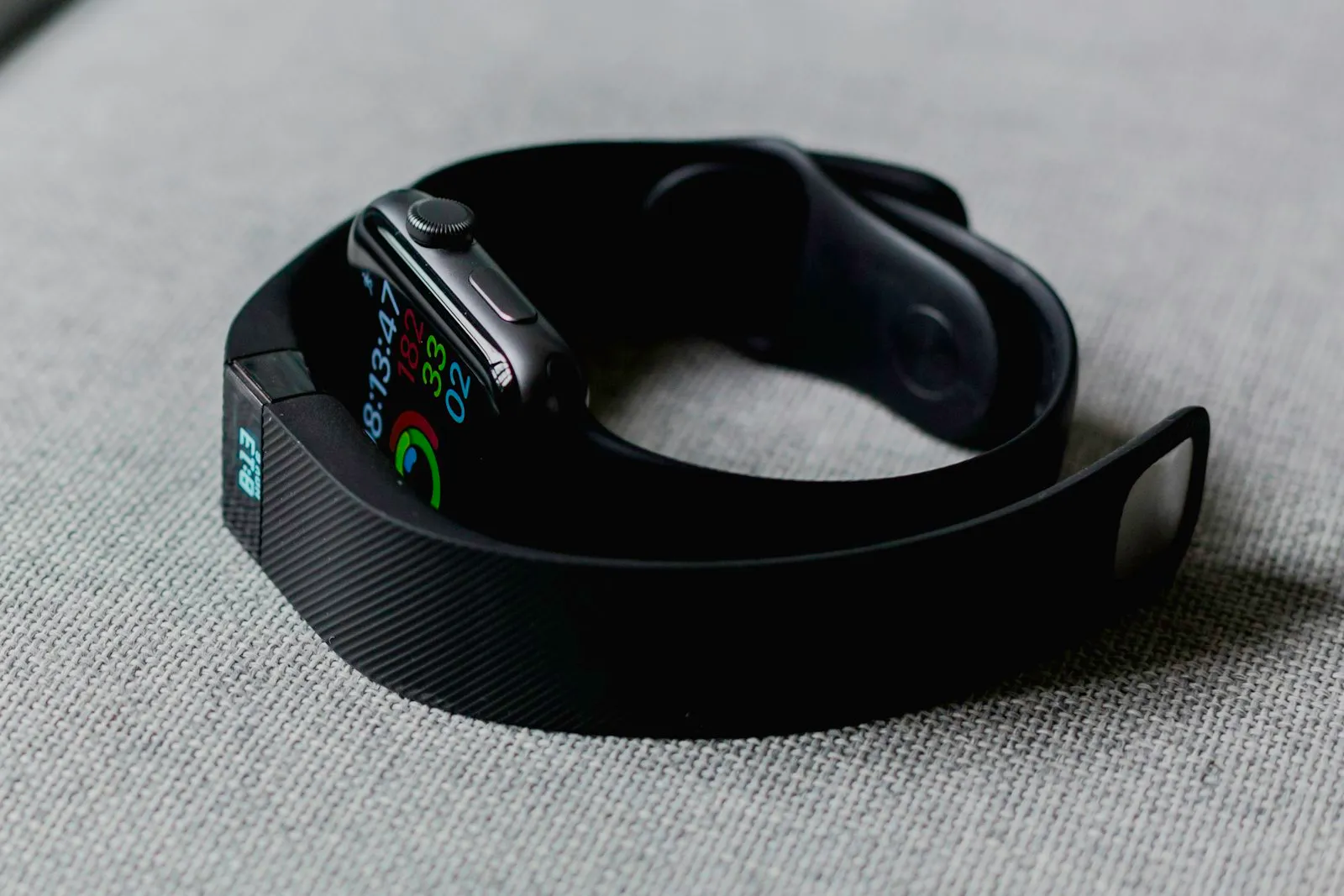
Three people, three watches, one kitchen. One of you is on 38 and feels wrecked. One is on 71 and feels fine. The third has a number that has been sliding all morning. Somebody asks who is actually the most tired, and the argument goes nowhere.
It goes nowhere because the question has no answer. Here is why.
The three scores, side by side
What each score is actually measuring
| WHOOP Recovery | Garmin Body Battery | Oura Readiness | |
|---|---|---|---|
| What it answers | How well did your body handle last night? | How much have you got left right now? | How ready are you for today? |
| When it is calculated | Once, on waking | Continuously, all day | Once, in the morning |
| Main inputs | HRV and resting heart rate during sleep, sleep performance, respiratory rate | Heart rate variability, stress, activity and rest | Resting heart rate, HRV balance, body temperature, recovery index, sleep, previous day activity |
| Compared against | Your own rolling baseline | Your own baseline, minus what the day has cost you | Your own baseline, per contributor |
| Moves during the day? | No | Yes, constantly | No |
Read the last two rows. Two of these are photographs taken at dawn. The third is a fuel gauge.
Why a 70 is not a 70
Every one of these scores is measured against you, not against people in general. None of them describes your body in absolute terms.
That is the right call. Heart rate variability varies enormously between people. Genetics, age and years of training all move it, so a raw HRV number tells you very little unless you know whose wrist it came from. Normalising against your own history turns a number you cannot act on into one you can.
The cost shows up the second you compare wrists. A 70 on your ring means “a bit better than normal, for you”. A 70 on your friend’s watch means “a bit better than normal, for them”. Same digits, different bodies, different states.
Across brands it is worse again. Each vendor picks its own baseline window and its own weighting of inputs, and none of them publish either in full. Feed the same night into two devices and you get two different answers, both defensible. The formulas are opaque enough that reconstructing them from the outside is a genre of its own; Rob ter Horst, who tests wearables against lab equipment for a living, regularly regresses branded scores back out of his own data:
The clock matters more than the inputs
- WHOOP Recovery
- Body Battery
- Oura Readiness
Illustrative shapes, not measured data
WHOOP and Oura draw a flat line. They said their piece at 7am and then stayed quiet. Body Battery slopes downward all day, because that is the whole job: your night fills the tank and your day empties it.
So “my Body Battery says 20 but my Recovery said 62” is not a contradiction. At 6pm, after a day of work and a session, both are true statements about different moments.

What you can compare across devices
The split is cleaner than most people expect.
Compare these freely. They have real units:
- steps
- distance, in kilometres
- workout duration
- active minutes
- heart rate, in beats per minute
- sleep duration, in hours
A kilometre is a kilometre on every wrist. Eight thousand steps is eight thousand steps, mostly: even steps drift a little by device, which is its own story in why your phone, watch and ring disagree on steps. The steadiest cross-brand number is active minutes, because it measures effort against a shared guideline. This is what a friendly competition can actually be built on.
Do not compare these. They have a trademark on them:
- WHOOP Recovery, Strain
- Garmin Body Battery, Stress, Training Readiness
- Oura Readiness, Sleep Score
- Apple readiness, the 0 to 10 score added in 2026
- any other 0 to 100 score with a brand attached
All of them are normalised to the individual, weighted in ways nobody publishes, and in some cases measured over windows that differ between vendors. They are excellent for tracking yourself. Between people they mean nothing. The same goes for the estimates each brand builds from your heart rate, like VO2 max and calories burned: personal numbers, not shared ones.
Apple joined this list in September 2026. Apple Watch Series 12 and Ultra 4 added their own readiness score, a daily 0 to 10 read against your baseline, so the Apple wrist now carries a personal recovery number just like the others, and just like the others it does not compare between people. We worked through what that means for the strap in Apple Watch readiness score vs WHOOP.
That split is why Fit, the cross-brand fitness competition app, scores crews on the absolute measures and never passes a vendor’s index through. A Garmin user and an Apple Watch user can be ranked honestly on active minutes and distance. They cannot be ranked on one brand’s readiness score against another’s, because no two of them are built the same way.
Where Fit loses: it will not tell you whether to train hard today. That is a readiness question, and WHOOP and Oura are genuinely good at it. Use the strap or the ring for that decision, and save the comparing for numbers that carry units.
What to do with this
- Read your own score as a direction. “Down 15 from my usual” is the signal. “62” on its own is not.
- Do not cross-reference brands on the same day. If you wear two devices, expect them to disagree, and pick the one you actually act on.
- Give a new device two to four weeks. Until it knows your normal, the baseline it is comparing you against is mostly a guess.
- Compete on units. If you want a number to argue about with your friends, argue about kilometres.
Questions people actually ask
Can I compare my WHOOP Recovery to my friend's Oura Readiness?
No, and not because either one is wrong. Both scores are measured against the wearer's own baseline, so each describes a distance from personal normal rather than an absolute state. Two people can both sit at 70 in completely different physiological shape. Putting the numbers side by side tells you nothing about who is more recovered.
Which is more accurate, Body Battery or WHOOP Recovery?
They answer different questions, so accuracy is not really the comparison. WHOOP Recovery grades the night you just had. Body Battery estimates what you have left right now. Body Battery reading lower at 4pm than your Recovery did at 7am is the system working, not the two disagreeing.
Why is my Body Battery high when my WHOOP Recovery is low?
Usually because you slept badly but have not spent anything yet. WHOOP scores the night, so a rough one shows up as a low Recovery straight away. Body Battery starts from whatever your night restored and then drains with stress and activity, so on a quiet morning it can still read high. By late afternoon the two usually agree.
What fitness metrics can I actually compare between different brands?
The ones with real units: steps, distance in kilometres, workout duration, active minutes, heart rate in beats per minute, sleep duration in hours. Every device reports those on the same scale, so they hold up between people. Anything that is a branded 0 to 100 index, like Recovery, Readiness, Body Battery or Stress, is relative to you and does not.
Sources
Keep reading
- Comparability
Active minutes, explained: the one cross-device number worth competing on
Apple Exercise Minutes, Fitbit Active Zone Minutes and Garmin Intensity Minutes measure almost the same thing. Here is how they line up across brands.
Apple WatchFitbitGarmin Read -
 Comparability
 Why your Apple Watch, Garmin and Samsung all show a different VO2 max
Your watch estimates VO2 max from heart rate and pace, so the number changes with the brand, the activity and the algorithm. Here is what it really means.
Apple WatchGarminSamsung Read -
 Comparability
 Why your phone, watch and ring all show a different step count
Your phone, watch and ring can disagree by thousands of steps a day. Here is what each one is actually counting, and which number to trust.
Apple WatchFitbitGarmin Read
Get the next one by email
Occasional notes on making fitness numbers comparable across devices, and reading your own baseline. No spam, unsubscribe in one tap.
We email you once to confirm. Your address is only used for these notes.