How to
40 fitness challenge ideas that survive past the first week
40 fitness challenge ideas for friends, work and remote groups: step races, distance chases, strength ladders and streaks, plus the shape that makes them stick.
Quick answer
The best fitness challenge ideas share a shape, not a theme: a short repeating round, a metric every device measures the same way, a group small enough that the back of the pack still feels in it, and a small stake framed as a loss. Weekly active-minutes races, distance chases along a famous route, push-up ladders and streaks all fit that shape. Thirty-day accumulation pushes and steps across different brands do not, which is why they die around day nine.
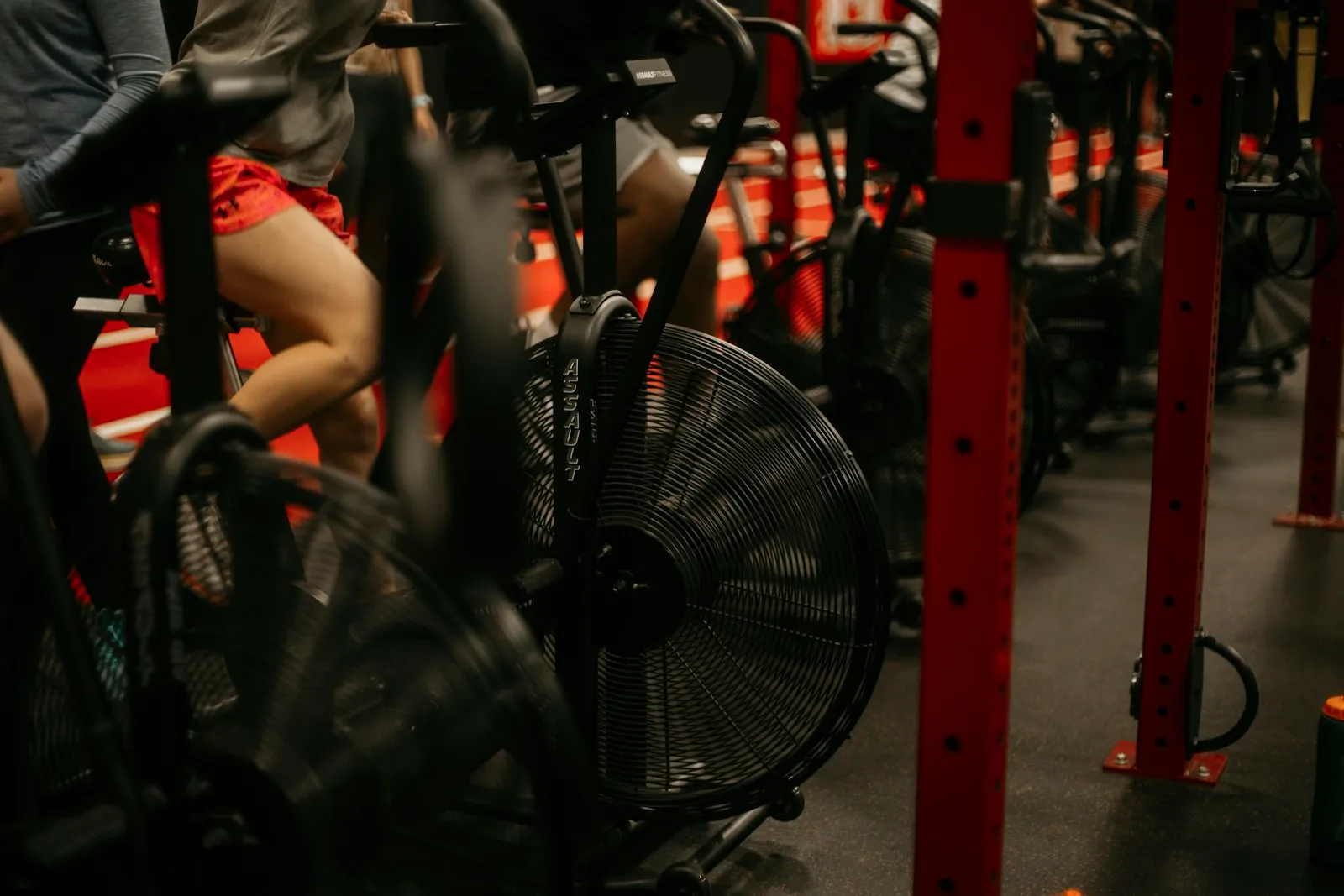
Search “fitness challenge ideas” and you get lists of themes: squat months, plank ladders, hydration streaks, 10,000-step Januaries. The theme is rarely the problem. Almost any activity works for the week everyone is excited. What decides whether a challenge is still alive on day twelve is its shape, and the shape is something the behavioural research is unusually clear about.
So this list does both jobs: 40 ideas, grouped by who they suit, and the structure that keeps each one going past the first week.
The shape that survives, in one table
Every durable challenge, whatever its theme, tends to share four traits. Every challenge that collapses is usually missing one.
Why challenges live or die
| Trait | Survives with | Dies without |
|---|---|---|
| Length | A short round that repeats weekly | One long 30-day accumulation push |
| Metric | One unit every device measures alike | Steps across mismatched brands |
| Group size | Three to eight, loosely matched | Twenty, where the back gives up |
| Stakes | Small, silly, framed as a loss | Big, serious, winner-takes-all |
Hold that shape in mind and the good ideas sort themselves. Every idea below is built to fit it.
Step and walking challenge ideas
- The weekly step race, on matched devices. Most steps Monday to Sunday, reset every week. Fair when everyone counts on the same kind of device; across brands, read why step counts differ before you start.
- The personal step floor. Everyone picks their own daily target and the score is days hit, not total steps, so someone aiming for 5,000 competes on equal terms with someone aiming for 12,000.
- The lunch-walk streak. A walk of at least 15 minutes every workday, scored on streak length, which rewards showing up rather than stride length.
- The stairs challenge. Take the stairs every time, log floors climbed, and race the week. Most watches count floors, and nobody needs a gym.
- The after-dinner walk. Ten minutes after the evening meal, logged as a streak. A gentle one for families and groups with very different fitness.
- The weekend long walk. One walk of an hour or more each weekend, and the group shares a photo from it. The photos do more motivating than the numbers.
If your group wants an app to run these, the step challenge apps guide compares the free ones.
Running, cycling and distance challenge ideas
- The weekly distance chase. Rank on kilometres run, ridden or walked over a week. Cleaner than steps for a mixed group, and it puts the cyclist and the walker on the same board.
- The consistency run. Three runs a week of any length, scored on weeks completed. It beats a mileage race for a group with a marathoner and a beginner in it.
- The monthly total, scored weekly. If the group wants a big number, set a monthly group target, but show a weekly scoreboard so one bad week does not end anyone’s month.
- The virtual 5K. Everyone runs the same distance any time in a set window, on any route, and the fastest recorded time wins. Run it again a month later and score the improvement.
- The new-route month. Every run or ride has to go somewhere you have not been before. Novelty is often exactly what a stalled routine is missing.
- The commute swap. Replace one car or transit trip a week with walking or cycling, and log the distance as a group total.
Strength and bodyweight challenge ideas
- The push-up ladder. Test everyone’s comfortable set on day one, then each person adds one rep per session from their own starting number. Score sessions completed, never raw reps.
- The plank ladder. Start from each person’s comfortable hold and add five seconds a day, dropping back a step after a missed day rather than starting over.
- The daily squat set. A set of bodyweight squats every day, scaled to the person, logged as a streak.
- The two-a-week strength minimum. Two strength sessions a week, any kind, and the week only counts if both happen. It matches the WHO’s advice to do muscle-strengthening work on at least two days a week.
- The wall sit retest. One timed wall sit each Friday, ranked on improvement from each person’s first attempt rather than on the raw time.
- The pull-up project. Everyone works towards a first or a next pull-up over six weeks, with assisted variations, and the group checks progress together every Friday.
One-minute fitness challenge ideas
Quick ones for a group chat, a team meeting or a daily streak. Score each person against their own first attempt, not against each other, so beginners stay in.
- Most push-ups in one minute, on the knees or against a wall for anyone who needs it.
- Burpees in sixty seconds, counted honestly, full stand at the top.
- The one-minute plank, or the longest hold up to a minute.
- Skipping or jumping jacks for a minute, counted, retested weekly.
Habit and recovery challenge ideas
- The 150-minute week. Everyone chases the WHO guideline of 150 minutes of moderate activity a week, logged as active minutes. It is the most durable format for a mixed-device group, because every brand counts it on a similar scale.
- The mobility streak. Ten minutes of stretching or mobility work every day, logged by ticking it off.
- The bedtime window. Lights out within the same 30-minute window every night for a week. It scores consistency rather than hours asleep, which the trackers disagree on anyway.
- The morning outdoor walk. Ten minutes outside before work, scored as a streak.
- No zero days. Some deliberate movement every day, even five minutes. The bar is low on purpose; the point is the unbroken chain.
- The honest rest day. Everyone logs at least one genuine rest day a week, and a week without one does not count. It keeps the most competitive person in the group from grinding themselves into an injury.
Team and workplace challenge ideas
The workplace rule is different: the goal is inclusion and momentum, not a podium. So the ideas that work are the gentle ones, and our work fitness challenge playbook covers the design in full.
- Team active-minutes totals. Pool each small team’s active minutes so the least active person adds to a group total rather than sitting last on a public list.
- The department relay. Each team covers a set distance together over two weeks, and any mix of walking, running and cycling counts.
- The walking-meeting quota. Each team logs a number of walking meetings a week. It costs no extra time, which is why people actually do it.
- The two-week opt-in. A short, voluntary round with a visible board and a silly prize. Never rank raw fitness, and never design anything that spotlights who moved least.
- The charity kilometre pot. The company donates a set amount per team kilometre, so every contribution counts for something beyond the leaderboard.
- Bracketed leagues. Split a big office into brackets of similar activity level, so every person is racing people within reach.

Virtual and remote challenge ideas
Distance is the friend of the remote group. Because it is a real unit, it lets people in different cities pull one rope. The full playbook for a distributed group is in how to run a virtual fitness challenge.
- Travel a famous route. Add up the group’s combined kilometres and “walk” them along a known route on a shared map. It turns a scattered team into one effort moving together, which is exactly the contagion effect that makes competing with friends work.
- Time-zone-proof streaks. A daily active-minutes target that each person hits whenever their day allows, ranked by streak length, needs nobody online at the same moment.
- Head-to-head pairs. Each week the group is paired off at random and each person races one partner on active minutes. One close rival beats a leaderboard of twenty.
- The weekly group target. Nobody races anybody; the whole group has to hit a combined total by Sunday. Good for teams with very different fitness.
- The photo-proof weekend. Everyone posts one photo from a weekend walk, run or ride. It replaces some of the in-person energy a remote group lacks.
- The standing crew. Not a challenge with an end date at all, but a small crew with a rolling weekly rank, which is the format the research most consistently supports.
The two levers worth more than any theme
Whatever idea you pick, two behavioural tricks do the heavy lifting. First, frame the stake as a loss: the Penn wearable trials had people defend points they already held, because losing stings more than winning pleases. Second, temptation bundling, chaining a treat to the activity, which Katy Milkman tested by holding audiobooks hostage at the gym:
Where the app comes in
Every idea here needs the same plumbing: a scoreboard that updates itself from everyone’s device and lives where the group already talks. That is the job Fit, the cross-brand fitness competition app, is built for: standing crews ranked on active minutes and distance across Apple, Garmin, Fitbit, WHOOP and the rest, on a weekly cycle. Honest limit, because we owe it: if your group is entirely on Apple Watches, Apple’s built-in competitions run these same weekly rounds one tap away, and an all-Fitbit group that only wants steps has simpler options. Fit is for the mixed group that wants the race to be fair, and the fitness competition apps comparison covers the rest of the field.
What to do with this
- Pick a shape, then a theme. Start from the table, not the Pinterest board. A weekly active-minutes race is the safest first choice.
- Keep it short and repeating. One week, Monday reset. The full recipe is here.
- Score people against themselves where fitness varies. Ladders, streaks and retests keep beginners in; raw totals only work between near-equals.
- Make the stake small and losable. Five dollars in, loser buys coffee, beats any big serious pot.
- Automate the scoreboard. If a human has to update a spreadsheet, the challenge outlives their patience by zero days.
Questions people actually ask
What is a good fitness challenge idea for a group with different devices?
A weekly active-minutes race. Active minutes are reported by Apple, Fitbit, Garmin and Samsung on roughly the same scale, keyed to the same 150-minutes-a-week guideline, so a mixed group competes fairly without arguing about hardware. Set a Monday reset, keep it to three to eight people, and rank everyone on minutes rather than steps, which drift between brands.
What are good virtual or remote fitness challenge ideas?
Distance-to-a-landmark chases work brilliantly remotely: the group's combined kilometres 'travel' a famous route, so people in different cities pull one rope together. Streak challenges, where everyone just has to hit a daily movement target, also suit remote teams because they do not need anyone in the same place. Both only need an app that reads each person's device and shows one shared board.
What is a good work or office fitness challenge?
A short, opt-in, low-stakes one that does not assume everyone is fit. A two-week active-minutes or step challenge with small teams, a visible leaderboard and a silly prize gets participation without pressuring people. Avoid anything that ranks raw fitness or singles out the least active person; the point at work is momentum and inclusion, not a winner podium.
What are quick fitness challenges you can do in one minute?
Most push-ups in a minute, burpees in sixty seconds, the longest plank hold up to a minute, and skipping or jumping jacks for a minute all work. Score each person against their own first attempt rather than against each other, so beginners stay in the game and the challenge tracks improvement instead of raw fitness.
How long should a fitness challenge be?
One week, repeating, beats a single long push. The STEP UP trial found that challenge effects faded once a one-off game ended, while a repeating round means nobody is ever more than a few days from a clean slate, so a bad Tuesday cannot end anyone's season. Apple reached the same conclusion: its native competitions are seven-day rounds.
Do fitness challenges need a prize to work?
A prize helps most when it is small and framed as a loss. Behavioural trials found people try harder to defend points they already hold than to earn new ones, so 'everyone puts in five dollars, loser buys coffee' outperforms a big winner-takes-all pot. Large serious stakes tend to push people either to quit or to game the tracker, which defeats the point.
Sources
- WHO: physical activity fact sheet (150 minutes a week, strength on two or more days)
- Patel et al., the STEP UP randomized clinical trial (JAMA Internal Medicine, 2019)
- Irwin et al., the Kohler effect in aerobic exercise (Annals of Behavioral Medicine, 2012)
- Milkman et al., temptation bundling (Management Science, 2014)
Keep reading
-
 How to
 How to run a fitness challenge your friends will actually finish
Most group fitness challenges die by day nine. The fixes are boring and specific: the right metric, the right length, the right stakes, a fair scoreboard.
Apple WatchFitbitGarmin Read -
 How to
 How to run a virtual fitness challenge that survives the distance
A virtual fitness challenge has three problems a same-room one lacks: mixed devices, nobody watching, no shared energy. Here is how to design around them.
Apple WatchGarminFitbit Read -
 How to
 How to run a work fitness challenge people actually join
Most office fitness challenges reward the fittest people anyway. Here is how to design one for broad participation, mixed devices and privacy.
Apple WatchFitbitGarmin Read
Get the next one by email
Occasional notes on making fitness numbers comparable across devices, and reading your own baseline. No spam, unsubscribe in one tap.
We email you once to confirm. Your address is only used for these notes.