Data
Does competing with friends actually make you fitter? What the research says
Five studies on social exercise, from a 1.1 million-runner network to head-to-head trials of competition against support. The answer is yes, with caveats.
Quick answer
Yes, and the effect is larger than most training tweaks. In randomized trials, people biking with a partner lasted roughly twice as long as those biking alone, gym attendance was about 90 percent higher in competitive groups than supportive ones, and a step competition added roughly 900 steps a day. One caveat: rankings motivate most when rivals are close, so compete in a small group of peers, on units every device counts the same way.
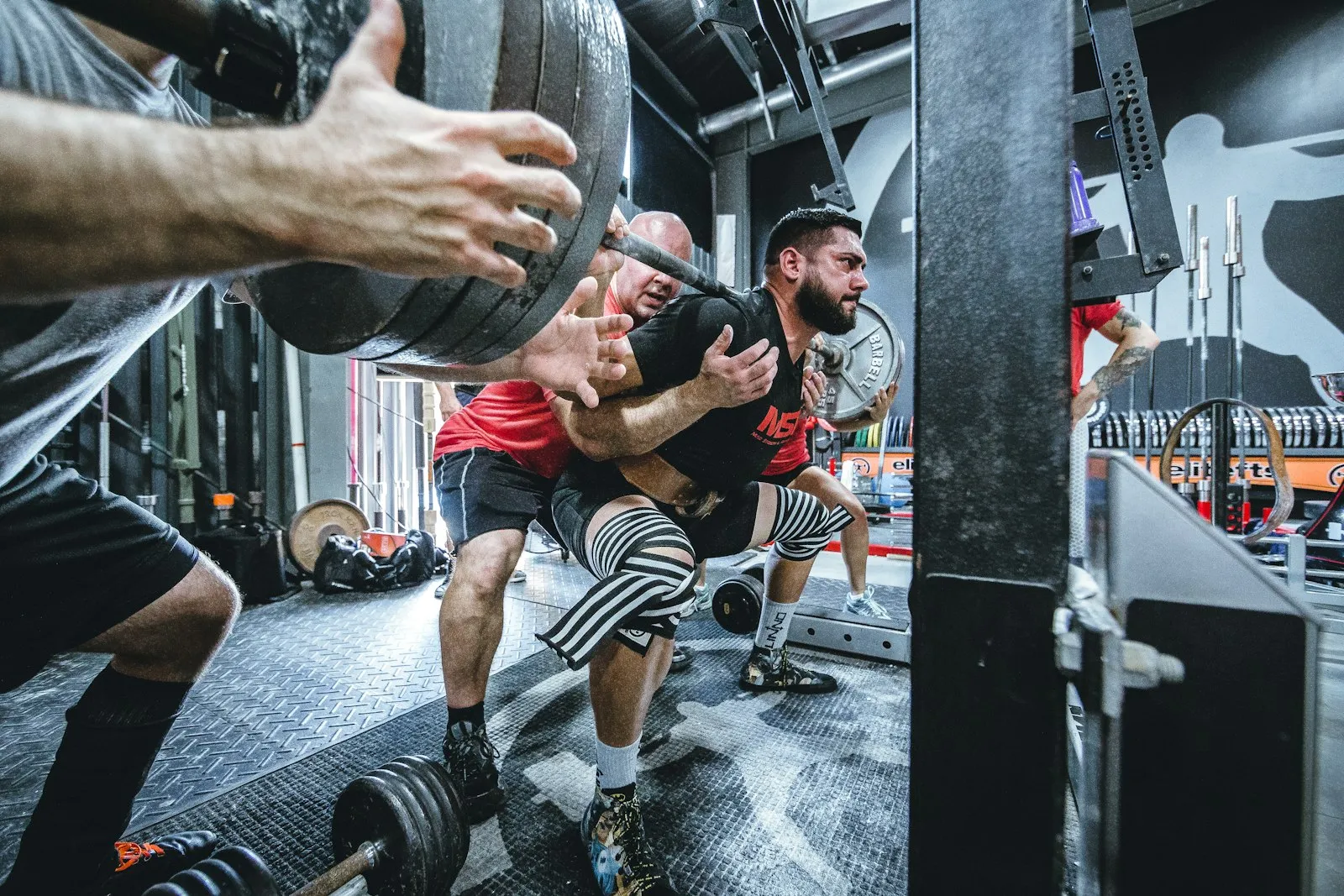
It is 9:40 on a Tuesday night and you are walking laps of your own kitchen, because someone in the group chat is 400 steps ahead and you refuse to sleep on second place. From the outside this looks ridiculous. Inside the research on exercise motivation, it looks like the single most reliable effect anyone has found.
This is what the studies actually show, sizes and caveats included.
Your friends’ workouts change yours, causally
The cleanest evidence comes from a Nature Communications study that followed around 1.1 million runners, 350 million kilometres, over five years of a global fitness network. The clever part was the weather: rain in your friend’s city changes their running but not yours, which let the researchers separate real influence from mere similarity. The verdict is that running is contagious. On days your friends run more, you run more.
The direction of the pull is the part worth memorising: less active runners influenced their more active friends, and not the reverse. People run to stay ahead of the person behind them. If you have ever trained harder because a lapsed friend suddenly logged a 5k, that was not pettiness; that was the mechanism.
The same logic runs in reverse, which is the uncomfortable footnote. The famous Framingham network analysis found that a person’s chance of becoming obese rose 57 percent when a close friend did. Networks carry whatever is moving through them, effort or inertia. Choosing to make your activity visible to friends is choosing which contagion you host.
A partner nearly doubles how long you last
Contagion is passive. Add structure and the effect gets dramatic. In a randomized experiment at Michigan State, people rode an exercise bike alone, alongside a partner, or on a team where the team’s score was set by whoever quit first, with a partner slightly better than them. Riding alone lasted 10.6 minutes on average. On the team, 21.9 minutes: roughly double, sustained across six sessions.
The design detail that did the work is called the Kohler effect: you were the weaker member, your effort decided the team’s result, and the partner was moderately better, close enough to keep up with. Nobody doubles their output chasing someone twice their level. The gap has to feel closable.
- Alone
- Side by side
- Team, close partner
Illustrative shapes based on Irwin et al. 2012, not raw data
Competition beats support, by a lot
Support sounds nicer, so a University of Pennsylvania team tested it directly: 790 people, eleven weeks of gym classes, randomized into competitive groups, supportive teams, both, or a control. Attendance in the competitive conditions ran about 90 percent higher than in the non-competitive ones.
The result nobody expected: the purely supportive condition attended less than the control group, which got no social features at all. Encouragement without a scoreboard gave people cover to coast together. The researchers’ own lab tells the story well:
The larger STEP UP trial repeated the pattern with wearables: 602 overweight adults, six months, step goals wrapped in a points game with either support, collaboration or competition. All three beat the control while the game ran, but competition beat everything, about 920 extra steps a day, and it was the only arm still significantly ahead twelve weeks after the game ended.
The caveats that keep this honest
Three of them, all load-bearing. First, competition motivates most when the race is close, so a leaderboard of strangers or of one marathoner and four beginners loses the Kohler magic; small groups of actual peers keep every gap chaseable. Second, sustained beats one-off: every effect shrank when the games stopped, which argues for a standing weekly rhythm over a January blitz. Third, the scoreboard has to be fair. Mixed-device groups should race on active minutes or kilometres, never on steps across different wrists and never on branded scores, which are normalised to each individual body.

This body of research is, transparently, why Fit, the cross-brand fitness competition app, is shaped the way it is: small crews rather than global boards, a standing rank on active minutes and distance rather than one-off challenges, and no branded score ever compared between people. And the honest limit, straight from the same studies: competition is the strongest lever on average, not for every person. If a leaderboard reads as stress rather than fuel, one well-chosen training partner, Kohler style, may beat any app.
What to do with this
- Make your activity visible to a few people. Contagion needs a network; a private streak influences no one, including future you.
- Recruit peers, not heroes. The doubling effect came from a partner just slightly better. Build the group so everyone is within reach of someone.
- Prefer a standing competition to a one-off challenge. Only the design that kept score continuously survived its own ending.
- Score it on real units. Active minutes and kilometres travel between devices; recovery scores and step counts across brands do not. The how-to guide turns all of this into a setup you can run this week, and the fitness challenge ideas list has 40 formats built on these findings.
Questions people actually ask
Is exercise actually contagious between friends?
Measurably, yes. A Nature Communications study tracked about 1.1 million runners over five years and used weather shocks to separate influence from coincidence. Friends' runs causally changed each other's running on the same day, and the pull ran strongest upward: less active runners influenced their more active friends, not the reverse. Your slowest friend is moving you more than you think.
Which motivates more, competition or support?
Competition, in the trials that tested both head to head. In a Penn study of 790 people, gym attendance was about 90 percent higher in competitive designs than in non-competitive ones, and the purely supportive condition actually attended less than the control group. In the STEP UP trial, competition beat both support and collaboration, and was the only arm whose gains survived after the game ended.
Do fitness challenges keep working after they end?
Mostly they fade, which is an argument for standing formats rather than one-off events. In the STEP UP trial every design lost ground in follow-up, but the competition arm was the only one still significantly above control twelve weeks after the game stopped, holding about 570 extra steps a day.
Why do I give up when my friend is way ahead of me?
Because rank only motivates when it feels contestable. The Kohler effect studies that doubled exercise duration used a partner who was moderately better, close enough to chase. A giant gap flips the psychology from race to verdict. Small groups of similar people, or scoring that is relative to your own baseline, keep the gap chaseable.
Can I compete with friends if we use different fitness trackers?
Yes, but only on real units like active minutes, kilometres or workout time, which every brand measures on the same scale. Branded scores such as WHOOP Recovery or Garmin Body Battery are normalised to each person's own baseline and cannot rank two people even in principle.
Sources
- Aral & Nicolaides, Exercise contagion in a global social network (Nature Communications, 2017)
- Irwin et al., the Kohler effect in aerobic exercise (Annals of Behavioral Medicine, 2012)
- Zhang et al., Support or competition? A randomized controlled trial (Preventive Medicine Reports, 2016)
- Patel et al., the STEP UP randomized clinical trial (JAMA Internal Medicine, 2019)
- Christakis & Fowler, The spread of obesity in a large social network (NEJM, 2007)
Keep reading
-
 Alternatives
 The best fitness competition apps for competing with friends in 2026
The best fitness competition apps of 2026 for friends and groups: which are free, which work across Apple Watch, Garmin and Fitbit, and which one to pick.
Apple WatchGarminFitbit Read -
 How to
 40 fitness challenge ideas that survive past the first week
40 fitness challenge ideas for friends, work and remote groups: step races, distance chases, strength ladders and streaks, plus the shape that makes them stick.
Apple WatchFitbitGarmin Read -
 How to
 How to run a fitness challenge your friends will actually finish
Most group fitness challenges die by day nine. The fixes are boring and specific: the right metric, the right length, the right stakes, a fair scoreboard.
Apple WatchFitbitGarmin Read
Get the next one by email
Occasional notes on making fitness numbers comparable across devices, and reading your own baseline. No spam, unsubscribe in one tap.
We email you once to confirm. Your address is only used for these notes.